Introduction to Interleukin-6 (IL-6) and its Research Significance
Interleukin-6 (IL-6) is a multifunctional glycoprotein cytokine belonging to the interleukin superfamily, originally described as a B-cell stimulatory factor-2 (BSF-2). It plays a critical role in cellular communication, immune modulation, and signal transduction during inflammatory responses.
IL-6 acts through binding to its specific receptor complex (IL-6R and gp130), triggering downstream activation of the JAK/STAT3, MAPK, and PI3K/Akt pathways, leading to transcriptional activation of genes involved in immune cell differentiation, protein synthesis, and metabolic regulation.
Detailed insights on IL-6 receptor signaling and downstream mechanisms can be explored at:
IL-6 Detection by ELISA: Core Principle and Workflow
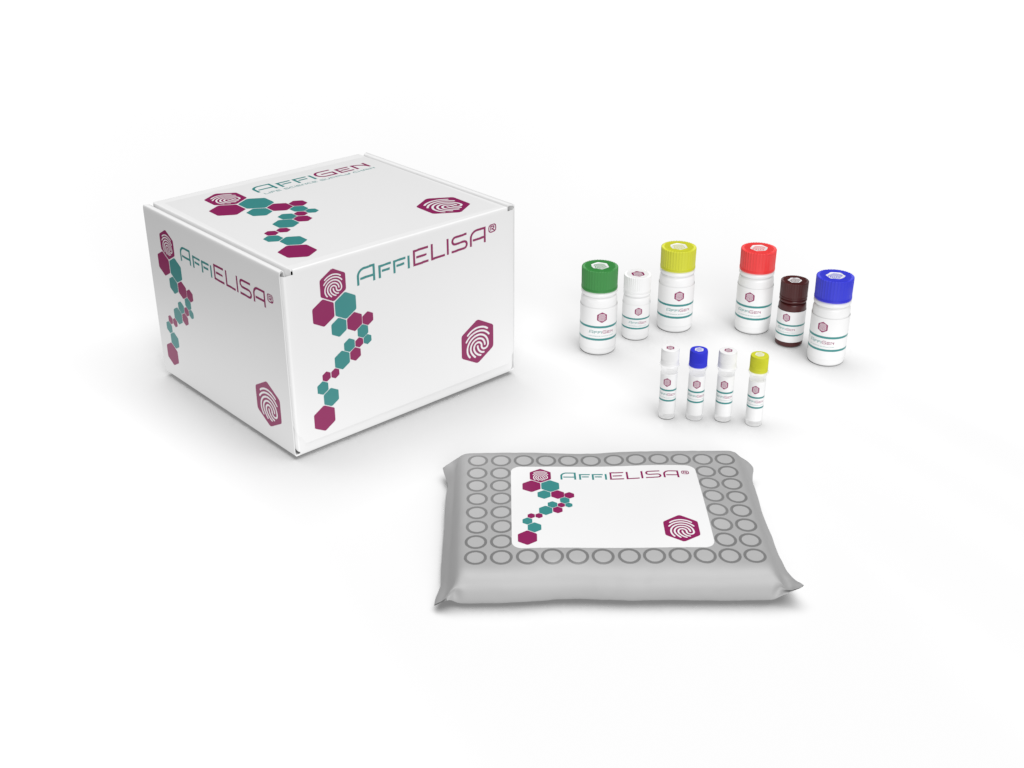
Enzyme-Linked Immunosorbent Assay (ELISA) is a cornerstone in molecular and cellular biology for measuring cytokines like IL-6. The IL-6 ELISA Kit operates via a sandwich detection format, designed to capture and quantify IL-6 with exceptional accuracy.
Workflow Overview
-
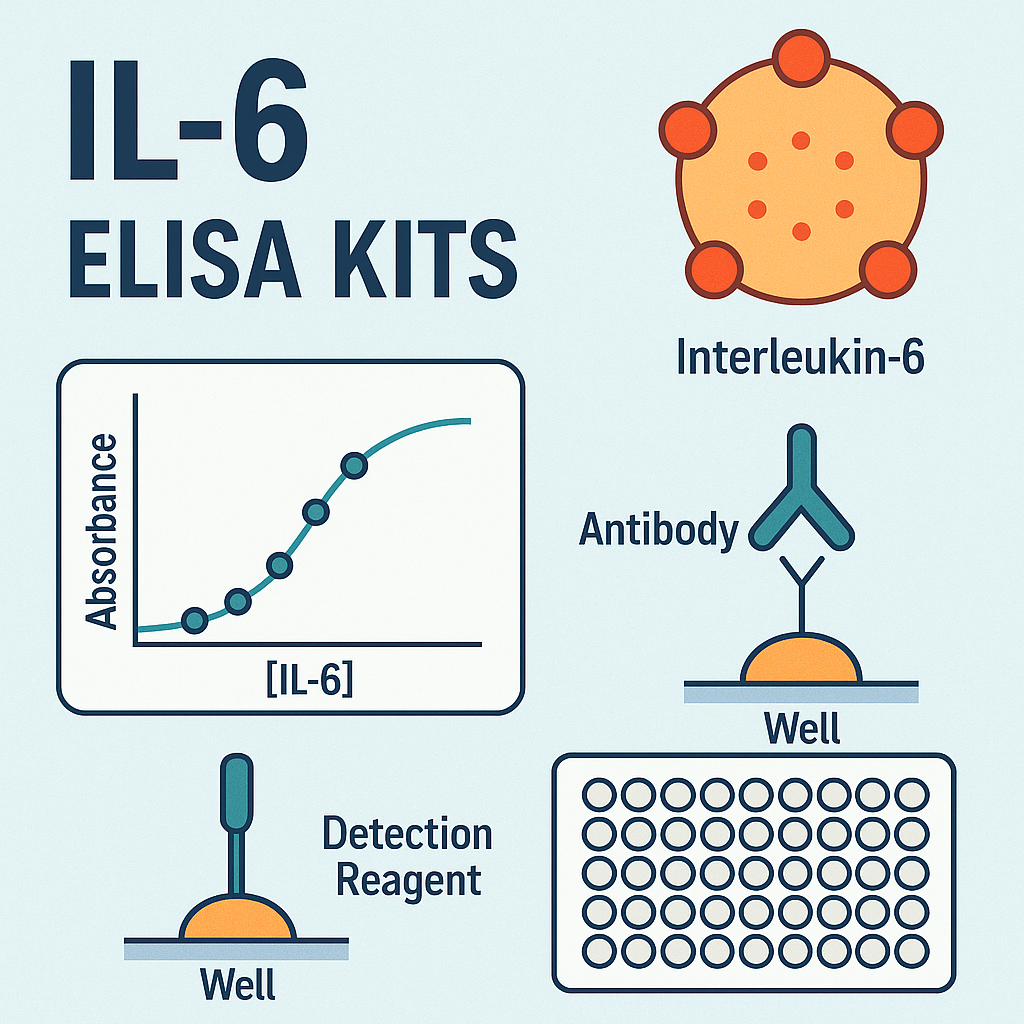
Coating Phase — A high-affinity monoclonal antibody specific to IL-6 is pre-coated onto a microtiter plate.
-
Sample Incubation — Biological samples (serum, plasma, or culture supernatants) containing IL-6 are added to the wells for antigen–antibody binding.
-
Detection Phase — A biotin-labeled secondary antibody binds to the captured IL-6 molecule.
-
Signal Amplification — Streptavidin-HRP conjugate binds to biotin, catalyzing TMB substrate into a measurable chromogenic product.
-
Quantification — The optical density (OD) is measured at 450 nm, and IL-6 concentration is determined using a standard curve.
More about ELISA principles and protocols can be found in resources from:
Technical Characteristics of IL-6 ELISA Kits
| Parameter | Specification |
|---|---|
| Detection Method | Sandwich ELISA |
| Target Analyte | Human IL-6 (Interleukin-6) |
| Sample Types | Serum, Plasma, Cell Culture Supernatants |
| Sensitivity | ≤ 0.5 pg/mL |
| Dynamic Range | 1.5 pg/mL – 1000 pg/mL |
| Assay Time | 2–3 hours |
| Detection Wavelength | 450 nm |
| Standard Curve | 7-Point Logarithmic Fit |
| Precision | CV < 10 % (intra-assay) |
| Storage Temperature | 2 – 8 °C |
| Regulatory Validation | NIH, FDA, GLP-aligned |
IL-6 ELISA kits are validated under Good Laboratory Practice (GLP) according to OECD guidelines and follow traceability standards referenced by the National Institute of Standards and Technology (NIST).
Applications of IL-6 Quantification in Experimental Biology
The IL-6 ELISA Kit is a critical analytical tool in multiple disciplines of life-science research. It provides quantitative insights into cytokine release, immune cell signaling, and biological stress responses.
1. Immunology and Cytokine Profiling
Researchers use IL-6 ELISA kits to assess cytokine dynamics in in vitro cell cultures, immunomodulation assays, and cytokine release studies.
-
Reference: NIH Immunology Division
2. Molecular Cell Biology
IL-6 concentration correlates with STAT3 activation and gene transcription under oxidative and metabolic stress.
-
Explore cell signaling resources at Cell Signaling Technology Research Hub (Harvard.edu)
3. Environmental and Stress Biology
Cytokine expression patterns, including IL-6, are studied to evaluate environmental stressors and pollutant exposure impacts on cultured cells.
4. Bioassay Development and Quality Control
Pharmaceutical and academic laboratories use IL-6 ELISA kits for calibration of cytokine standards, validation of recombinant protein production, and quality control of immunotherapeutic reagents.
-
Learn more at FDA Center for Biologics Evaluation and Research (CBER).
Experimental Design and Data Analysis
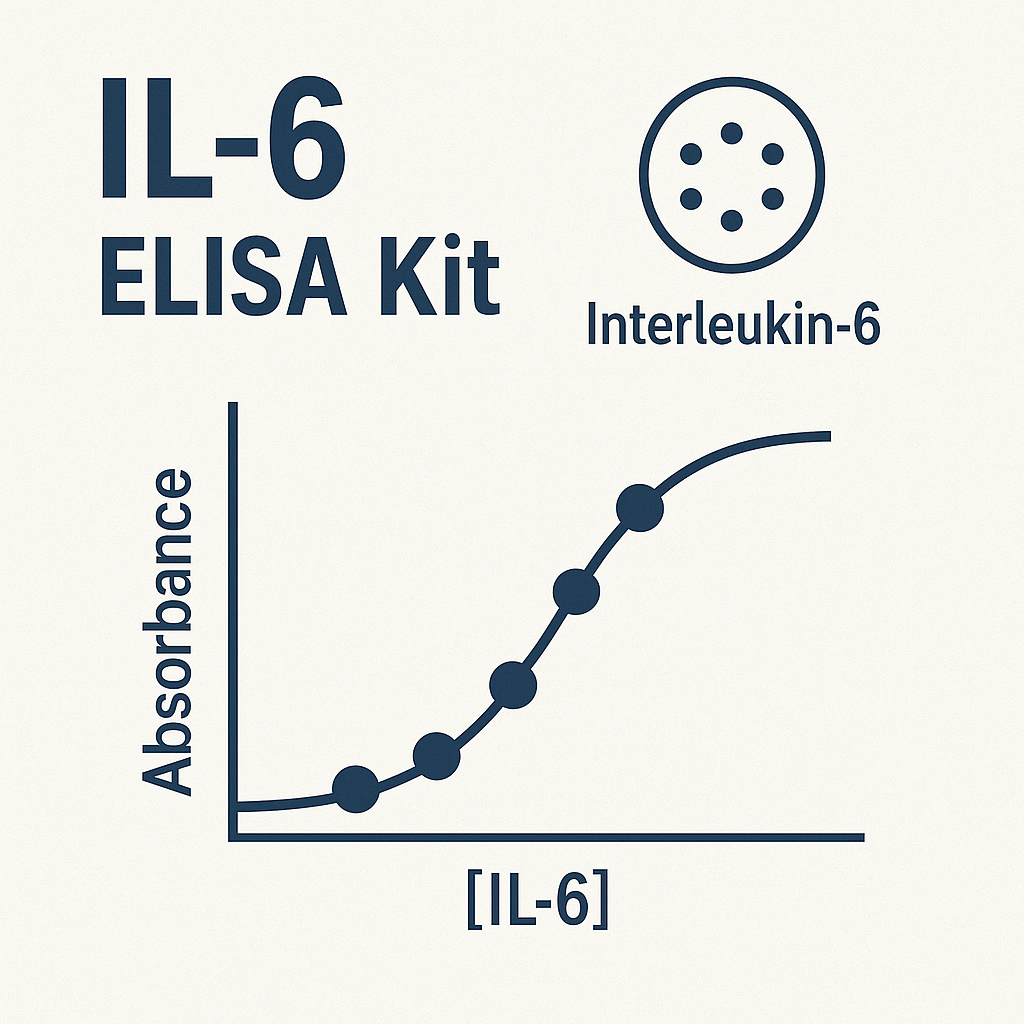
Quantitative IL-6 data are analyzed by plotting the standard curve (OD 450 nm vs concentration) using 4-parameter logistic regression (4-PL). This ensures precise interpolation across the full dynamic range.
Key statistical principles are documented in:
Researchers typically perform each sample in duplicate or triplicate to minimize random variation and achieve robust coefficient of variation (CV) values under 10 %.
Interleukin-6 in Cytokine Networks
IL-6 does not function in isolation — it interacts with a network of cytokines including IL-1β, TNF-α, IL-8, and IL-10. Together, they orchestrate immune cell recruitment and acute-phase protein synthesis.
Cross-referenced cytokine data repositories:
Advantages of Using IL-6 ELISA Kits in Research
-
High Analytical Sensitivity: Detects picogram quantities of IL-6.
-
Exceptional Specificity: No cross-reactivity with structurally similar interleukins.
-
Wide Dynamic Range: Ideal for both low and high concentration samples.
-
Ease of Use: Pre-coated plates reduce procedural variability.
-
Batch-to-Batch Consistency: Ensured via strict quality control aligned with NIH Research Quality Assurance Standards.
These attributes make IL-6 ELISA kits indispensable for basic science research, protein quantification, immunochemistry, and reagent validation.
Optimization and Troubleshooting Guidelines
Common factors influencing assay performance include:
-
Improper washing — may increase background signal.
-
Incomplete incubation — can reduce sensitivity.
-
Incorrect standard dilution — may distort calibration curves.
-
Temperature variation — impacts enzyme kinetics and color development.
For best practices, refer to:
Quality Assurance and Storage
IL-6 ELISA reagents should be stored at 2–8 °C, protected from direct light. The microplates are typically sealed in aluminum pouches with desiccant to prevent humidity-induced degradation.
All reagents are tested for stability under accelerated aging and freeze-thaw stress following FDA stability testing protocols.
For academic users, additional validation information can be found in the NIH Reagent Validation Framework.
Integration with Multiplex Cytokine Platforms
Although the IL-6 ELISA Kit provides single-analyte detection, it is often integrated with multiplex assays such as Luminex® cytokine bead arrays for simultaneous quantification of IL-1β, IL-8, IL-10, TNF-α, and GM-CSF.
See additional references:
Data Interpretation in Research Context
When analyzing IL-6 concentrations, researchers often normalize data to total protein content or cell number. Relative quantification against housekeeping cytokines (e.g., IL-10) ensures reliable comparison between experimental groups.
Statistical frameworks for interpreting cytokine data are detailed at:
Why IL-6 ELISA Kits Are Essential Tools in Cytokine Research
The IL-6 ELISA platform offers:
-
Quantitative reproducibility
-
Automation compatibility for high-throughput workflows
-
Standardized calibration curves ensuring global reproducibility
-
Cross-platform comparability with proteomics and transcriptomic assays
It aligns with international assay validation guidelines ensuring data reliability, traceability, and compliance with institutional laboratory policies.
Summary
IL-6 ELISA Kits represent a gold standard for cytokine quantification in immunology and molecular biology. With unmatched precision, reproducibility, and sensitivity, they are critical for advancing our understanding of cytokine signaling, cellular responses, and molecular regulation.
By leveraging optimized assay design, robust antibodies, and high-purity standards, these kits deliver consistent, reproducible results suitable for use in academic, industrial, and government-funded laboratories worldwide.
High-performance IL-6 ELISA Kits for accurate measurement of Interleukin-6 in serum, plasma, and cell culture samples. Discover sensitivity ranges, workflow principles, and research applications. Trusted by NIH, CDC, and academic laboratories for immunology and protein quantification studies.